Emil Lukas: Detectable with Distance

152.4 x 152.4 x 15.2 cm
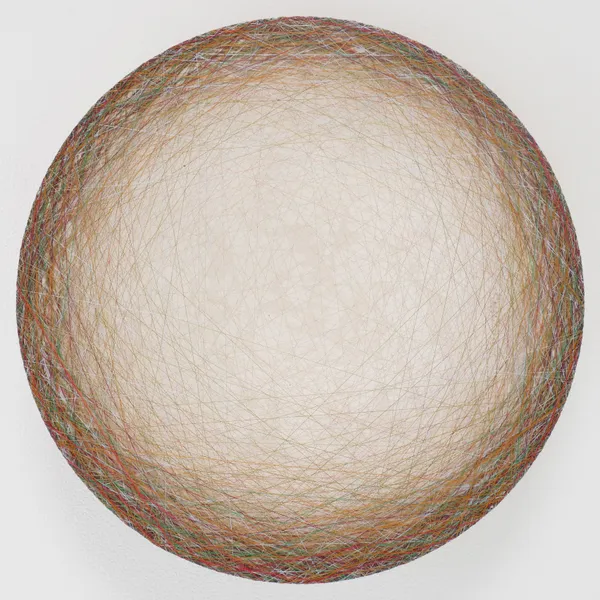
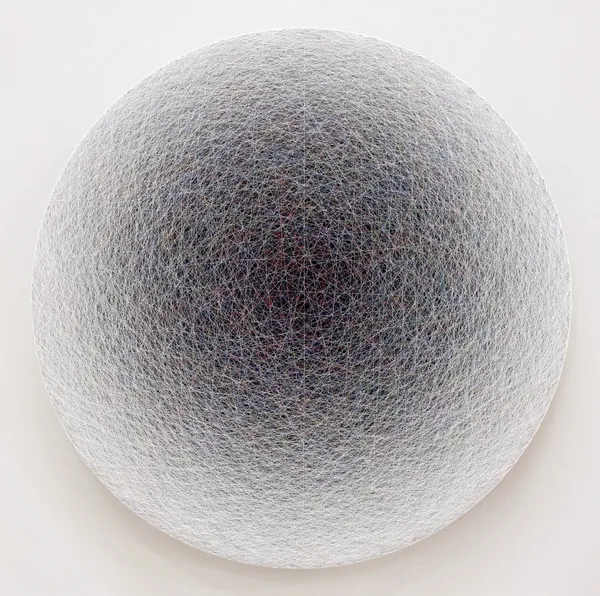
Emil Lukas' perplexing objects transcend their materiality to become meditations on the workings of the universe and the purpose of art.
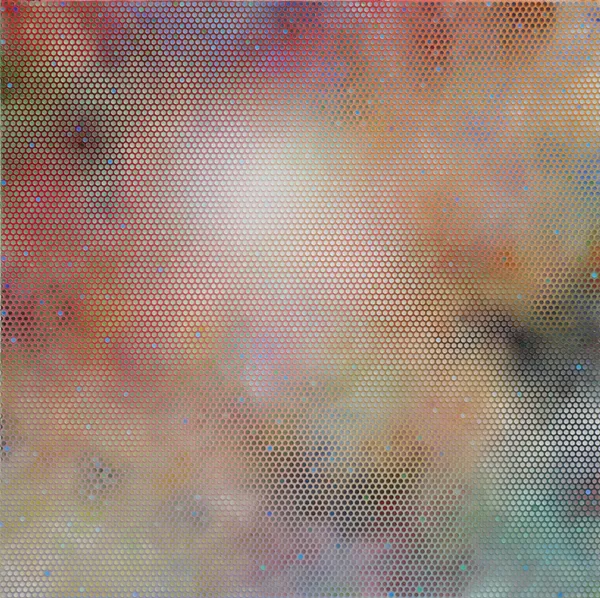
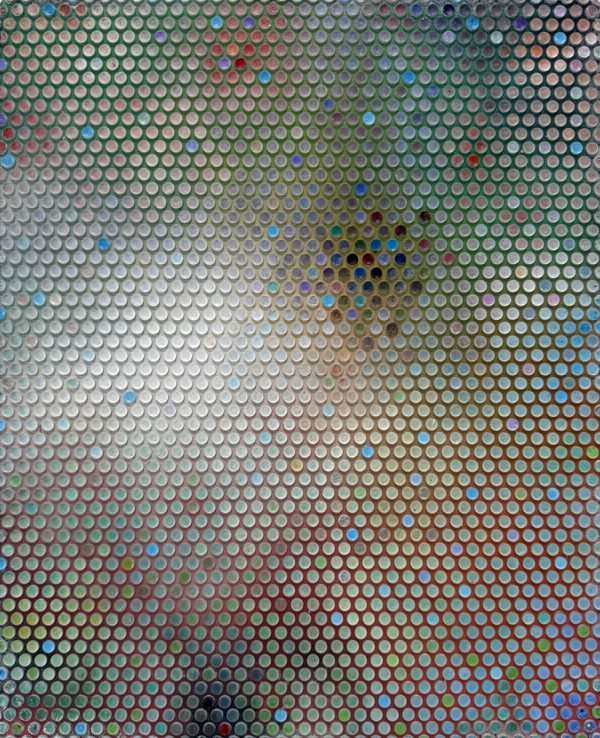
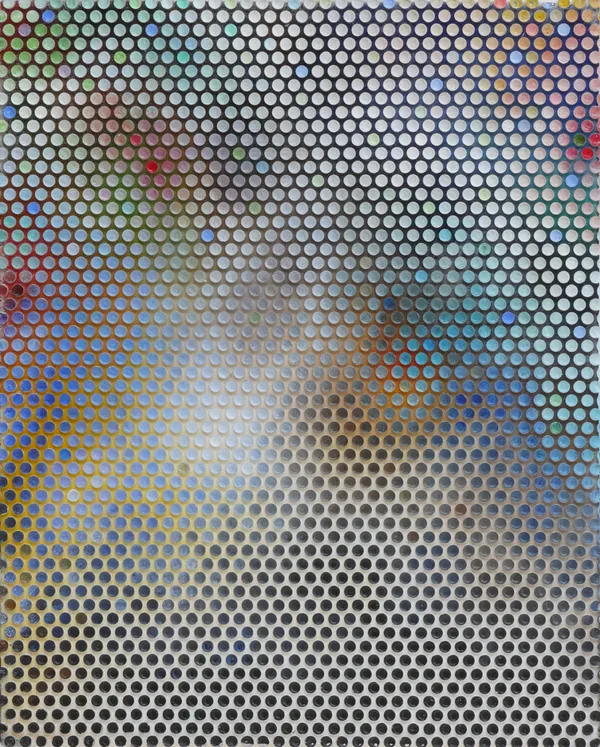
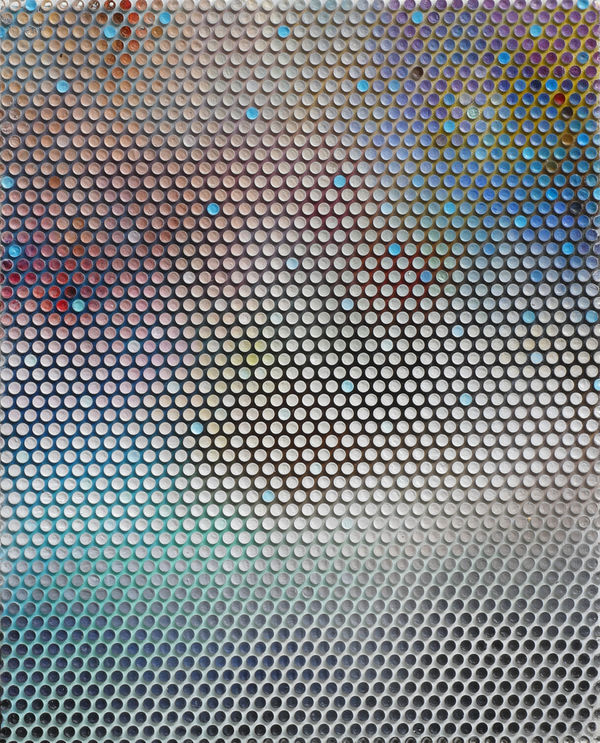
This installation focuses on two types of work from the artist's many-pronged practice: the "Thread Paintings" that he's best known for, and a new type of work he calls "Lattice Paintings," which though physically quite different, are conceptually related.
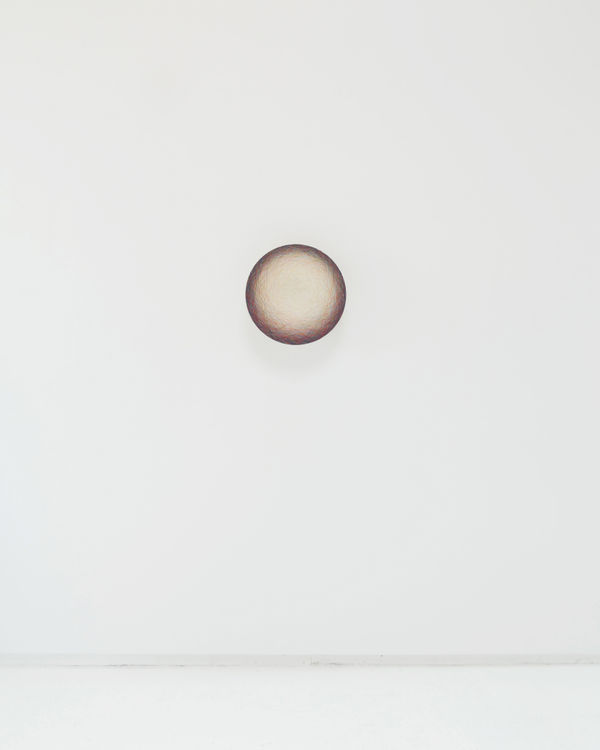
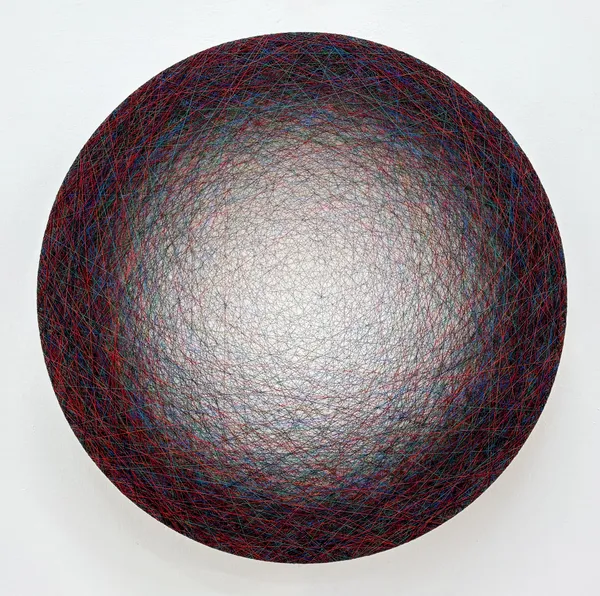
Confusingly, Lukas' "thread paintings" don't actually use paint. They're shallow wooden trays or parabolic plaster bowls across which he stretches colored filaments. The accumulation of delicate fiber lines creates complex color fields that shimmer and glow, changing with shifts in ambient light or the position of the viewer. Rectilinear works glimmer moodily, like twilit windows or glowing screens. Round pieces call to mind planets and moons—or ocular devices such as the lens of a telescope, microscope, or camera.
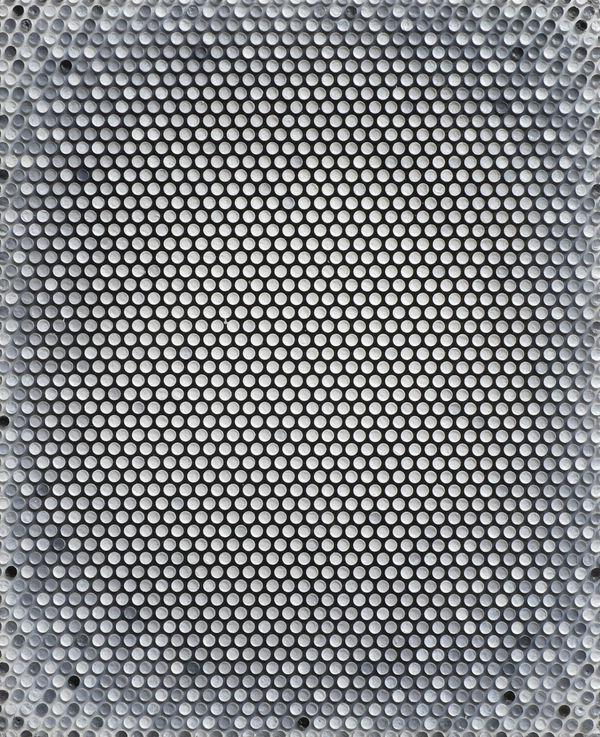
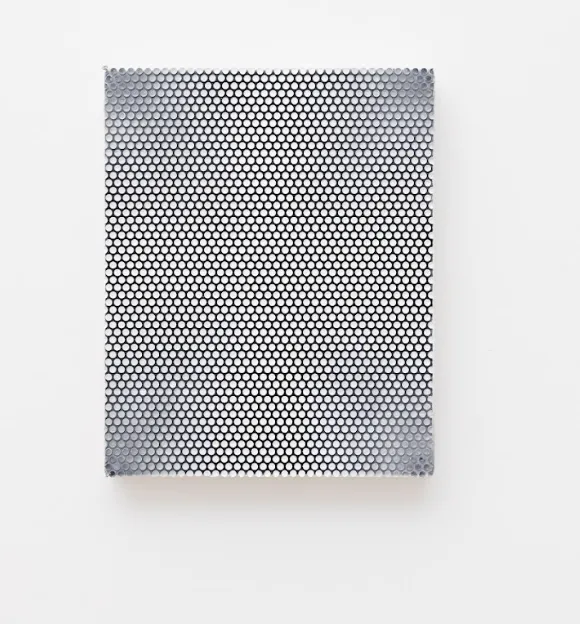
Though equally uncanny, the "Lattice Paintings " do, at least, actually utilize paint. Simply put, they're works on canvas upon which grids of tiny 3-dimensional colored circles of acrylic both obscure and reveal underpainting. In spite of the formalism of the overlying lattice, these paintings squarely fall within the lineage of Romanticism—Caspar David Friedrich, J.M.W. Turner, and the Hudson River School painters. They're also shimmering fields of semi- or non-objective pointillism.
Like the thread works, they are spatially elusive, luminous and optical. They are experiments in color theory where innumerable tiny marks make up something far beyond the sum of the parts.
The title Lukas chose for this exhibition—Detectable with Distance—would seem to suggest that these objects become more comprehensible if you step away for perspective. But in fact, it's only close examination that reveals their materials and the processes of their making—their physical truths. At a distance, these works are indeterminate. What Lukas actually gets at with this title is that these objects—and perhaps everything we experience—are something other than what they're literally made of... that it's in ambiguity that we find truth.
Humans have a deep need to figure things out. Some of us look for answers in religion, others in science. Perhaps many of the people reading this look for meaning in art. But the task of the artist is not to spoon feed us truths… it's to ask us questions. What does 'truth' even mean? How do we know what we think we know? It's the responsibility of a mindful viewer to come up with the answers. The magic of this exhibition is that from the humblest of materials—wood, plaster and colored thread, canvas and acrylic paint—Lukas conjures the most puzzling of objects: enigmatic artworks that defy definition and are open to as many interpretations as there are individual perspectives.
Emil Lukas was born in Pittsburgh in 1964 and lives in Easton, Pennsylvania. He has exhibited extensively internationally and has been collected by, among others, the San Francisco Museum of Modern Art, Crystal Bridges Museum of American Art, Denver Art Museum, Museum of Contemporary Art San Diego, Pennsylvania Academy of Fine Arts, San Jose Museum of Art, and the prestigious Panza di Biumo Collection. This is his ninth solo exhibition with Hosfelt Gallery.
-
 Emil Lukasdust #2402, 2026acrylic on canvas over wood panel48 x 48 x 3 in
121.9 x 121.9 x 7.6 cm -
-
-
Emil Lukaschandelier hallucination #2383, 2026thread, wood, paint, nails31 1/2 x 31 1/2 x 3 in
80 x 80 x 7.6 cm -
-
-
-
Emil Lukasphthay #2391, 2026acrylic on canvas over wood panel15 x 12 x 1 3/4 in
38.1 x 30.5 x 4.4 cm -
-
-
-
-
-
-
-
Emil Lukasessential condition #2308, 2025thread, wood, plaster, paint, nails47 1/2 x 47 1/2 x 5 in
120.7 x 120.7 x 12.7 cm -
-
-
-
-
-
-
-
-
-
-
-
-
-
-
Emil Lukasencounter #2331, 2025thread, wood, plaster, paint, nails27 x 27 x 3 1/2 in
68.6 x 68.6 x 8.9 cm -
Emil Lukasultra marine #2252, 2024thread, aluminum, wood, plaster, paint, nails27 x 27 x 3 1/2 in
68.6 x 68.6 x 8.9 cm